
Introduction
Roy is a 42-year-old man who has suffered from hayfever and sinus infections most of his life. He tried many antihistamines, but they didn’t help much. His wife, who used acupuncture for fertility treatments and had success, told him to give it a try. Roy never thought of using acupuncture, but decided to give it a go after hearing about his wife’s experience with alternative treatments.
Allergic rhinitis (AR) affects about 20-30% of people around the world. It causes common symptoms like a stuffy nose, sneezing, runny nose, itchy nose, asthma, sinus problems, inflammation, and fluid in the middle ear (Bu & Lou, 2025; Hashemi et al., 2025; Huang et al., 2024). AR can happen during certain seasons, like spring or summer, due to pollen in the air. It can also be caused by things inside like dust mites, mould, and pet dander. These triggers make up almost all cases of AR — about 20% seasonal, and the rest are from things found indoors (Bu & Lou, 2025). Pollen allergies alone affect about 10-15% of people (Bu & Lou, 2025).

AR is linked with stress because it’s a long-term condition that affects daily life. It can make it hard to sleep, go to work, or enjoy leisure time (Bu & Lou, 2025). Beyond its personal toll, AR imposes a significant financial burden on healthcare systems and society. In Europe alone, direct medical expenses for managing AR are estimated at €1.0 to €1.5 billion each year. Even more striking, indirect costs—such as reduced work productivity and absenteeism—add over €1 billion annually to the total (Huang et al., 2024). These staggering figures underscore the urgent need for more effective, accessible, and cost-efficient treatment solutions.

There are medicines that can help AR, like antihistamines, decongestants, and steroids. These may give fast relief, but they don’t fix the problem long-term and may cause side effects (Bu & Lou, 2025). Because of this, researchers are now combining regular treatments with alternative therapies like acupuncture. This can make treatment more effective and reduce side effects (Bu & Lou, 2025). Acupuncture is based on the idea of targeting points on the body called meridians. This helps improve how the body works and supports better health (Hashemi et al., 2025; Bu & Lou, 2025).

New research shows acupuncture may lower inflammation and help prevent AR by working through the immune and nervous systems (Bu & Lou, 2025). It affects nerve signals that help control the immune system, especially the vagus nerve and certain cells that fight infection (Bu & Lou, 2025). Before 2015, there wasn’t enough proof to use acupuncture for AR. But many studies since then have shown it can help people with ongoing allergic rhinitis (PAR) (Bu & Lou, 2025). Still, more research is needed for other types of AR.

Patient Presentation

When Roy came in for treatment, he had symptoms of hayfever and long-term sinus infections. His eyes were watery, his sinuses were blocked, and had a sore throat. He also had ear pain because his Eustachian tubes were blocked. Thick mucus built up in his sinuses and ears, which caused infections and pain. Because of this, acupuncture seemed like a good option to help both his symptoms and the causes of his condition.

Initial Assessment and Treatment Plan

Roy’s treatment followed ideas from Traditional Chinese Medicine (TCM) and was done in two steps:

Muscle Relaxation: First, needles were placed in the back of Roy’s head and neck. These points helped relax tight muscles that were adding pressure to his sinuses. This also helped ease stress in his neck and shoulders.

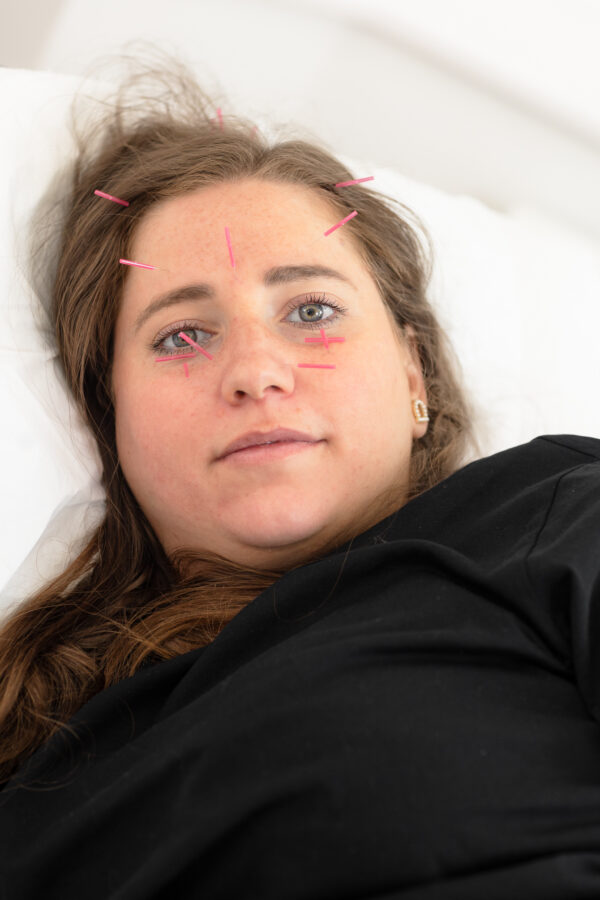
Facial Acupuncture: After relaxing the muscles, needles were used on Roy’s face, especially near the jaw and TMJ area. These spots helped with pain and congestion. Other points helped boost his immune system, following TCM’s way of treating allergies by making the body stronger.
Immediate Results

Roy felt better right after his first session. His eyes stopped watering, and the pain in his face got much better. This fast change likely happened because acupuncture helped clear blockages and reduced swelling. The quick results also showed it helped open up his nose and let fluid move better in his ear tubes (Hashemi et al., 2025; Bu & Lou, 2025).
Follow-Up and Long-Term Relief
After three acupuncture sessions, Roy felt a lot better. Within one week, his symptoms went down by about 70%. He had less sinus pressure and fewer allergy problems. After the third session, he no longer had any hayfever or sinus symptoms, showing that the treatment worked well over time.
Discussion
Roy’s experience matches new research showing that acupuncture can help people with AR and sinus problems. A review by Bu & Lou (2025) explains how acupuncture works. It helps the immune system, calms the nerves, and lowers inflammation. It also helps balance cells in the body that cause allergic reactions (Bu & Lou, 2025). Acupuncture affects the body’s nervous system too, which reduces nasal stuffiness and pressure in the sinuses (Hashemi et al., 2025; Bu & Lou, 2025). Roy felt these changes during his treatment.
Another study showed that using acupuncture with regular medicine worked better than using medicine alone. It helped reduce nasal symptoms and swelling (Huang et al., 2024). While Roy didn’t use both types of treatment, his case still shows how acupuncture alone helped a lot.
How Acupuncture Works for Hayfever and Sinus Problems
Acupuncture helps in several ways:
Immune System Support: It helps control immune cells and reduces chemicals that cause inflammation. This helped Roy’s allergies and irritated nose (Hashemi et al., 2025; Bu & Lou, 2025).
Nerve Support: It affects the nerves that control the nose and blood flow. This helped Roy feel less sinus pressure and pain (Hashemi et al., 2025; Bu & Lou, 2025).
Reduces Inflammation: It lowers the chemicals in the body that cause swelling, which helped Roy’s stuffy nose feel better (Bu & Lou, 2025).
Gut and Nose Health: New research says acupuncture may help good bacteria in the gut and nose, which supports the immune system (Bu & Lou, 2025). While this wasn’t tested in Roy’s case, it may help explain why he stayed better over time.
Conclusion
Roy’s case shows how acupuncture can help with chronic sinusitis and hayfever. He felt better quickly and stayed better after just a few sessions. This supports acupuncture as a helpful treatment, especially when regular medicine doesn’t work well. This case also supports new research about how acupuncture helps the immune system, nerves, and inflammation.
References
Bu, F., & Lou, Z. (2025). A review of recent progress in the mechanisms and effectiveness of acupuncture for treating allergic rhinitis. International Journal of General Medicine, Volume 18, 1–10. https://doi.org/10.2147/ijgm.s501158
Hashemi, S. M., Mokhtarinejad, F., Abtahi Forooshani, S. M., & Rezvani Habibabadi, M. (2025). The effect of acupuncture along with conventional therapies on the treatment of allergic rhinitis: A clinical trial. Advanced Biomedical Research, 14(1). https://doi.org/10.4103/abr.abr_49_22
Huang, Z., Xuan, X., Liu, S., Lin, J., Qian, Z., Chen, L., Qiu, R., & Cai, Y. (2024). A systematic review and meta-analysis of the efficacy and safety of traditional Chinese medicine in the treatment of Rhinosinusitis. Medicine, 103(48). https://doi.org/10.1097/md.0000000000040192